This product was not featured by Product Hunt yet. It will not be visible on their landing page and won't be ranked (cannot win product of the day regardless of upvotes).
OMS is a local, visual runtime for persistent Codex and Claude teams. One lead owns the task; managers coordinate major parts; contributors complete focused assignments. Teams work sequentially, in parallel, in batches, or through ralph style loops. OMS records every handoff, recovers after interruptions and errors, and returns one explicit completed or blocked Result. Free and self-hosted, MIT-licensed.
I built Oh My Subagents because starting subagents was easy, but operate agents across long, consequential work will be risky. Parents need to poll the subagent to get the progress, which wastes token, and one interruption like laptop power-off will make the subagent's run state unrecoverable.
OMS is a local runtime for persistent, supervised Codex and Claude teams. You can define reusable subagent workflows and orchestrate agent according to the workflow. The runtime will supervise the agent run and store durable workflow states in database, it can handle retry-able errors automatically, you can pause and resume the workflow anytime you want and make your daily workflow easier to operate.
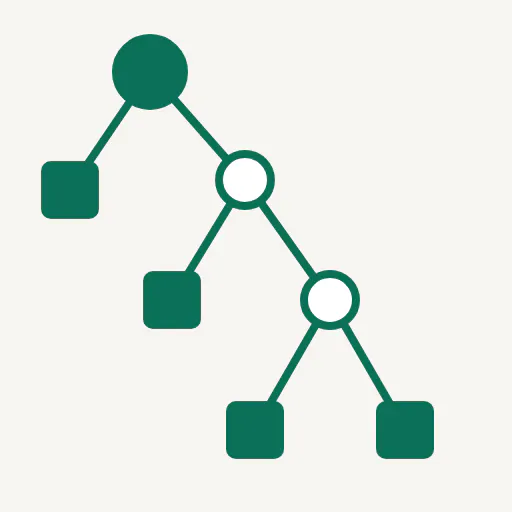
Every team has one lead who owns the complete task and its final Result. Beneath the lead, managers own major parts of the work, delegate focused assignments, and integrate what their teammates return. Contributors complete those focused assignments and return their findings, changes, or verification.
During a run, the lead and managers choose the pattern that fits the work: sequential steps, parallel investigation, batches divided among contributors, or repeated implement–review–repair cycles—including Ralph-style loops. OMS records every assignment and return, preserves the team’s waiting and recovery state, and resumes the right owner after interruptions, so the team can adapt without losing responsibility or history.
What you can do: • Design and publish reusable teams visually • Run dependent, parallel, iterative, or nested delegation • Recover from browser, provider, and controller interruptions • Steer active members and answer Human Requests • Inspect one exact Result with referenced workspace files
OMS is free and self-hosted, supports Windows 11, macOS, and Linux, defaults to SQLite, and works with Codex and Claude. The core is MIT-licensed.
I’d especially value feedback on two things: 1. Is the durable parent–subagent model clear? 2. Which workflow would you try first?
This looks genuinely useful for longer Codex and Claude tasks. The visual responsibility tree seems much easier to audit than following a long chain of chat messages.
About Oh My Subagents on Product Hunt
“better Codex and Claude subagent experience”
Oh My Subagents was submitted on Product Hunt and earned 3 upvotes and 2 comments, placing #81 on the daily leaderboard. OMS is a local, visual runtime for persistent Codex and Claude teams. One lead owns the task; managers coordinate major parts; contributors complete focused assignments. Teams work sequentially, in parallel, in batches, or through ralph style loops. OMS records every handoff, recovers after interruptions and errors, and returns one explicit completed or blocked Result. Free and self-hosted, MIT-licensed.
Oh My Subagents was featured in Open Source (69k followers), Developer Tools (521.8k followers), Artificial Intelligence (481.9k followers) and GitHub (41.4k followers) on Product Hunt. Together, these topics include over 271.4k products, making this a competitive space to launch in.
Who hunted Oh My Subagents?
Oh My Subagents was hunted by Leo Zhang. A “hunter” on Product Hunt is the community member who submits a product to the platform — uploading the images, the link, and tagging the makers behind it. Hunters typically write the first comment explaining why a product is worth attention, and their followers are notified the moment they post. Around 79% of featured launches on Product Hunt are self-hunted by their makers, but a well-known hunter still acts as a signal of quality to the rest of the community. See the full all-time top hunters leaderboard to discover who is shaping the Product Hunt ecosystem.
Want to see how Oh My Subagents stacked up against nearby launches in real time? Check out the live launch dashboard for upvote speed charts, proximity comparisons, and more analytics.

 Leo Zhang
Hey Product Hunt 👋
I built Oh My Subagents because starting subagents was easy, but operate agents across long, consequential work will be risky. Parents need to poll the subagent to get the progress, which wastes token, and one interruption like laptop power-off will make the subagent's run state unrecoverable.
OMS is a local runtime for persistent, supervised Codex and Claude teams. You can define reusable subagent workflows and orchestrate agent according to the workflow. The runtime will supervise the agent run and store durable workflow states in database, it can handle retry-able errors automatically, you can pause and resume the workflow anytime you want and make your daily workflow easier to operate.
Every team has one lead who owns the complete task and its final Result. Beneath the lead, managers own major parts of the work, delegate focused assignments, and integrate what their teammates return. Contributors complete those focused assignments and return their findings, changes, or verification.
During a run, the lead and managers choose the pattern that fits the work: sequential steps, parallel investigation, batches divided among contributors, or repeated implement–review–repair cycles—including Ralph-style loops. OMS records every assignment and return, preserves the team’s waiting and recovery state, and resumes the right owner after interruptions, so the team can adapt without losing responsibility or history.
What you can do:
• Design and publish reusable teams visually
• Run dependent, parallel, iterative, or nested delegation
• Recover from browser, provider, and controller interruptions
• Steer active members and answer Human Requests
• Inspect one exact Result with referenced workspace files
OMS is free and self-hosted, supports Windows 11, macOS, and Linux, defaults to SQLite, and works with Codex and Claude. The core is MIT-licensed.
I’d especially value feedback on two things:
1. Is the durable parent–subagent model clear?
2. Which workflow would you try first?
GitHub: https://github.com/ringlochid/oh...